Tjaden
Tjaden is a skinny, voracious locksmith and a member of Paul Bäumer's squad in All Quiet on the Western Front, known for his insatiable appetite, sharp tongue, and deep-seated grudge against the bullying corporal Himmelstoss. His character embodies the raw, survival-driven humor and the fierce, often petty, loyalties that sustain the soldiers amid the war's devastation.
Identity and Introduction
Tjaden is introduced as a skinny locksmith of the same age as Paul Bäumer, Albert Kropp, and Müller, and is described as the biggest eater of the company. He sits down to eat as thin as a grasshopper and gets up as big as a bug in the family way, a paradox that marks him from the start. He is part of the core group that forms the head of the queue at the cookhouse, and his sharp, mousy features and cunning eyes are noted when he realizes the cook has prepared rations for a hundred and fifty men while only eighty remain. His voracity is a defining trait, but it is paired with a certain foresight in others; where Tjaden's appetite is pure greed, Müller's similar behavior is described as prudence.
Conflict with Himmelstoss and the Thrashing
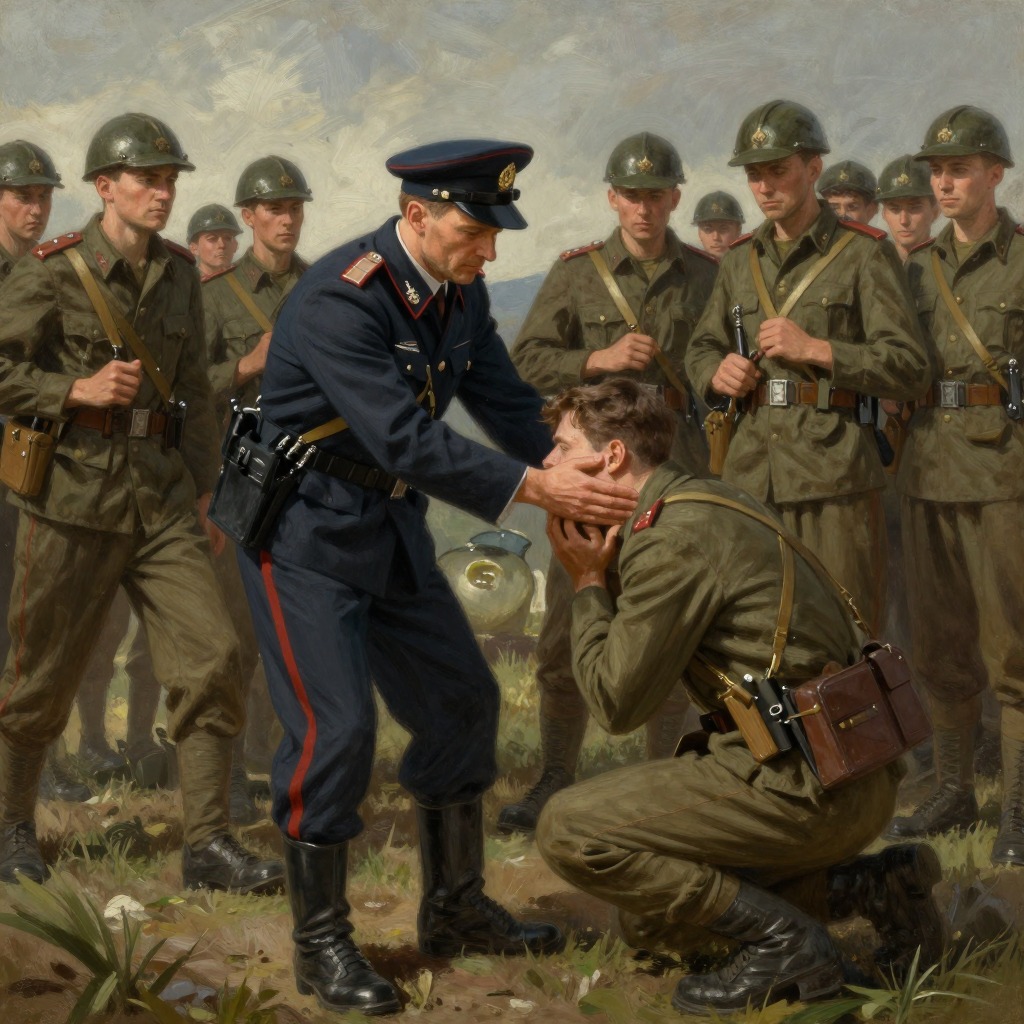
Tjaden's most significant personal conflict is with Corporal Himmelstoss, the strict disciplinarian who tormented him during training. Himmelstoss, a small, foxy-moustached postman, had a special dislike for Tjaden, Kropp, Westhus, and Paul, sensing a quiet defiance. Himmelstoss's particular cruelty toward Tjaden stemmed from Tjaden's bed-wetting, which Himmelstoss maintained was sheer laziness. To cure him, Himmelstoss paired Tjaden with another bed-wetter named Kindervater, placing them in upper and lower bunks so that each would retaliate against the other. This system of self-education failed, and the matter ended with one of them always sleeping on the floor, where he frequently caught cold. The night before the squad left for the front, Tjaden, along with Haie Westhus, Kropp, and Paul, ambushed Himmelstoss on a dark road. They threw a bed-cover over his head, and while Haie held him down, Tjaden unbuttoned Himmelstoss's braces, pulled down his trousers, and beat him with a whip. Tjaden was indefatigable, towering over the prone corporal like a woodcutter, and had to be dragged away to let the others take their turn. This act of revenge was a high point for Tjaden, and he later meditates for hours on what to say to Himmelstoss when he arrives at the front.
Life at the Front and Comradeship
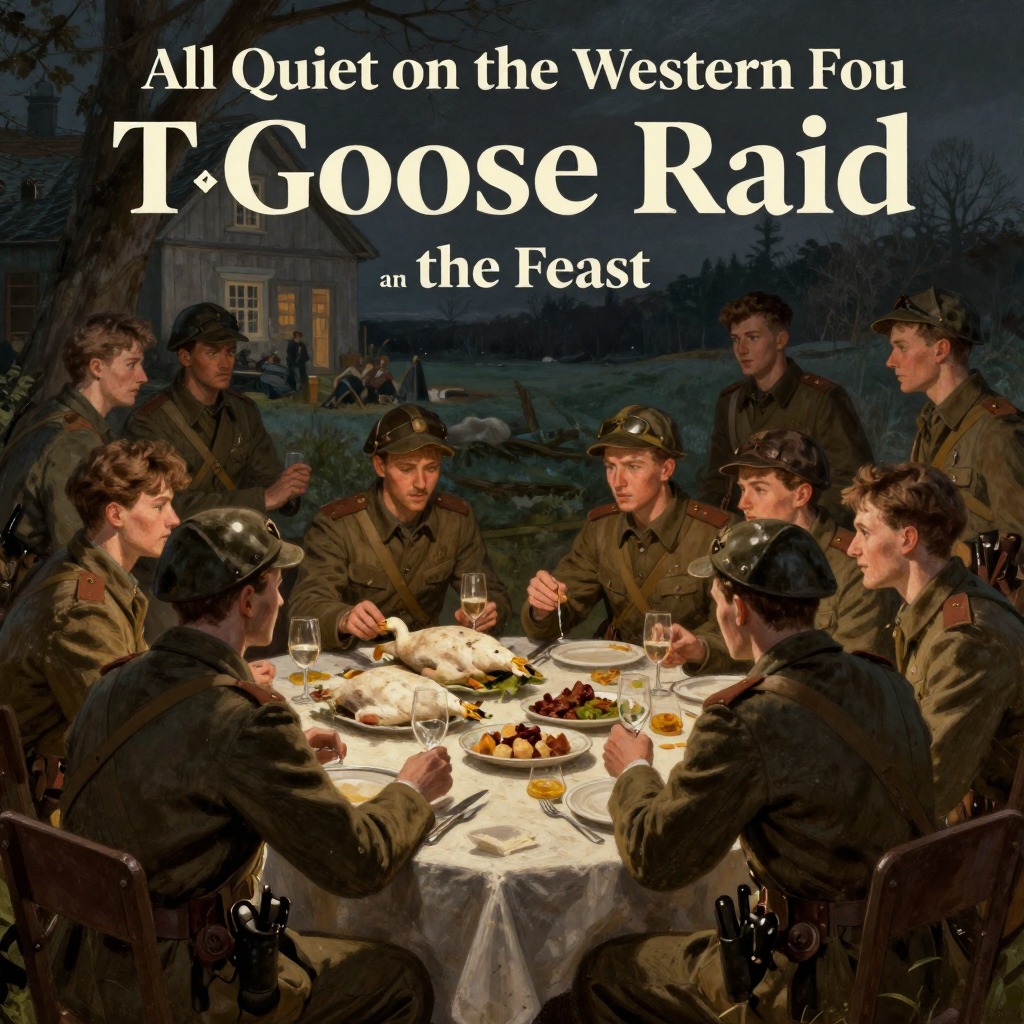
At the front, Tjaden's humor and appetite remain constants. He is a cheerful soul, untroubled by worries, and when threatened with court-martial for insulting Himmelstoss, he shrugs it off, noting that five days' close arrest are five days' rest. He is a lucky wretch at cards, winning at skat far into the night. During the rest periods, Tjaden joins in the group's discussions about what they would do in peacetime, his only thought being to see that Himmelstoss didn't get past him. He would like to have him in a cage and sail into him with a club every morning. He also participates in the group's foraging and feasting, such as the goose-stealing episode, where he holds a wing in his mouth with both hands like a mouth-organ and gnaws, drinking the gravy from the pot and smacking his lips. In the hospital, Tjaden is part of the group that schemes to keep together, and he is promised Müller's boots after Paul inherits them.
Change and Ending
Tjaden's character does not undergo a profound transformation; he remains a consistent figure of comic relief and stubborn survival. He is one of the few old hands left as the war drags on, and he is the one to whom Paul promises Müller's boots after Müller's death. Tjaden's fate is not explicitly detailed in the novel's final pages, but he is among the dwindling number of the original squad. His presence, however, is a testament to the kind of soldier who endures through a combination of luck, appetite, and an unyielding, if petty, defiance against authority. He is a flat character in the Forsterian sense, built around a single idea—the insatiable, cunning survivor—but he is instantly recognizable and memorable for his role in the group's dynamic.
Thematic Significance
Tjaden represents the soldier's ability to find humor and satisfaction in the most dire circumstances. His constant hunger and his obsession with food and revenge against Himmelstoss are not just personal quirks but are emblematic of the soldiers' struggle for basic necessities and their need to assert some control over their lives. His coarse jokes and his participation in the group's pranks and feasts are a form of resistance against the dehumanizing machinery of war. Tjaden's character, with his sharp, mousy features and his cunning, shows that even in the face of death, the human spirit clings to the small pleasures of a good meal and the satisfaction of a long-awaited revenge.